

Energy, industrial and digital infrastructure are no longer parallel trends — they feed and accelerate each other. The energy transition needs AI to optimise grids. Decarbonised industry runs on electrification and digital control. AI cannot scale without massive clean power infrastructure. These three forces have merged into a single investment megatrend.
The energy transition demands more than renewables. It requires a complete rebuild of the physical grid — long-duration storage, advanced power electronics, and grid-edge flexibility hardware that turns factories and data centres into active grid participants. RIF backs the companies building this new physical energy backbone.
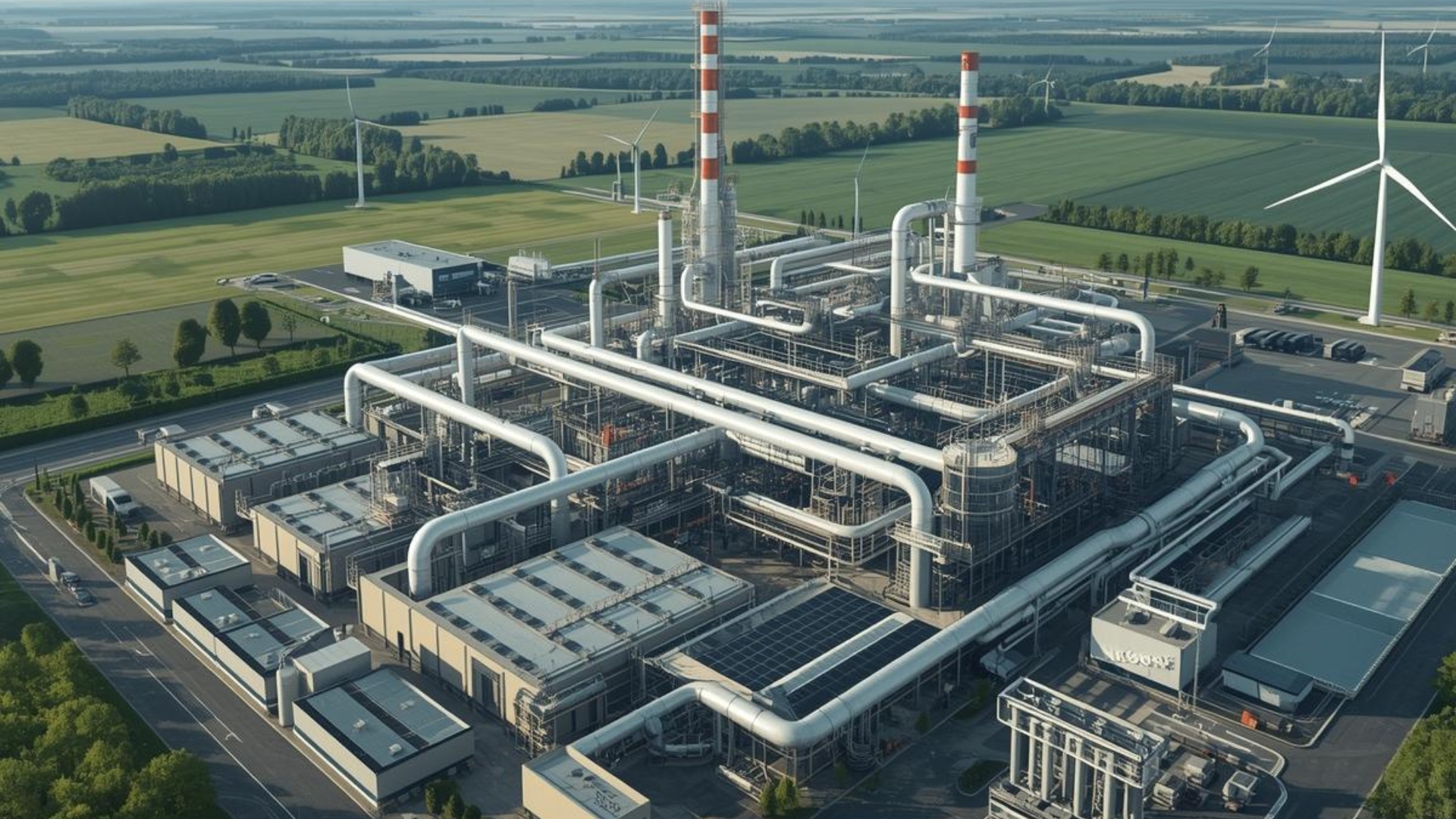
Europe's industrial base must be decarbonised, digitally connected, and made more resilient. Process heat electrification, industrial robotics, smart water systems, and flexible microgrids are not optional upgrades — they are structural requirements in a competitive, carbon-constrained economy. RIF invests in technologies turning factories into intelligent, low-carbon assets.

AI cannot scale without physical infrastructure. Data centres are becoming industrial-scale energy consumers. Edge computing pushes intelligence to the network periphery. Digital twins enable real-time optimisation of energy and industrial systems. RIF backs the hardware and platform companies making AI infrastructure resilient, efficient, and deployable at scale across Europe.
Energy, industrial and digital infrastructure are no longer parallel trends — they feed and accelerate each other. The energy transition needs AI to optimise grids. Decarbonised industry runs on electrification and digital control. AI cannot scale without massive clean power infrastructure. These three forces have merged into a single investment megatrend.
The energy transition demands more than renewables. It requires a complete rebuild of the physical grid — long-duration storage, advanced power electronics, and grid-edge flexibility hardware that turns factories and data centres into active grid participants.
Europe's industrial base must be decarbonised, digitally connected, and made more resilient. Process heat electrification, industrial robotics, smart water systems, and flexible microgrids are structural requirements in a competitive, carbon-constrained economy.
AI cannot scale without physical infrastructure. Data centres are becoming industrial-scale energy consumers. Edge computing pushes intelligence to the network periphery. Digital twins enable real-time optimisation of energy and industrial systems.
Infratech companies sit in a structural no-man's land. Hardtech doesn't fit classic VC timelines. Infrastructure capital arrives far too late. Between them lies the double valley of death — where early deployment is chronically undercapitalised.
Hardware-intensive, asset-heavy infrastructure plays don't work with traditional venture timelines. VC systematically underfunds hard-tech, creating a gap between prototyping and early commercialisation.
Infrastructure and project finance require proven, fully de-risked technologies with multi-year track records. These investors enter only once all technology risk has been eliminated — often a decade after initial demonstrations.
Built on 20+ years of InfraTech experience, F4E blends equity investment with structured, asset-based capital aligned with deployment milestones — so companies scale with far less reliance on repeated equity rounds.
The result: a Pareto-optimal allocation of capital that turns a fragmented hard-tech landscape into a structured, investable asset class. Prototype → Deployment → Platform → Infrastructure scale.
Bridge the funding gap without corporate debt or excessive equity dilution at unfavourable valuations.
Deploy first-of-a-kind (FOAK) units using asset-based vehicles, generating early revenue without diluting the cap table.
Move faster from prototype to deployed asset — building industrial partnerships and the track record that matters.
Create a clear pathway to infrastructure financing readiness, unlocking institutional capital at the right moment.
The window for strategic positioning is limited. The investors and founders who act now will shape — and benefit from — the next decades of European competitiveness.
Get in Touch with RIFInvestment Thesis & Strategy
The Infra-Triangle is RIF's core investment framework. It identifies the deep convergence of three infrastructure systems that are increasingly interdependent: Energy (renewables, grids, storage, electrification), Industrial (factories, process heat, robotics, circular ecosystems), and Digital (data centres, edge computing, AI-driven hardware).
These three systems are no longer separate sectors. AI growth requires exponential electricity and cooling capacity. Industrial decarbonisation demands digitally enabled energy infrastructure. Renewable electrification creates volatility that only digitally optimised industrial loads can help balance. RIF invests precisely at the intersections where these three systems converge — the zone where the most critical and underserved innovation happens.
Most cleantech and deeptech funds cover too broad a mandate, leading to portfolio dilution and misaligned expertise. RIF's narrow focus on the Infra-Triangle gives it a structural advantage: deep domain knowledge in industrial processes, grid physics, thermal dynamics, data-centre mechanics, and power electronics.
More importantly, RIF sits in a gap that neither traditional VC nor infrastructure capital addresses well. European VC often struggles with asset-heavy technologies; deeptech funds frequently lack the structured finance capabilities needed to bridge companies into infrastructure deployment. RIF is purpose-built for exactly this space.
AI may look digital… but it runs on electricity, grids and cooling systems.
RIF focuses on companies at TRL 6+ (prototype/pilot stage) through to early commercial deployment. These are companies that have demonstrated technical performance but have not yet attracted traditional project or infrastructure finance — precisely the window where the greatest value is created and where most European hardtech companies fail to scale.
RIF deliberately avoids the crowded early seed stage (pre-product) and the fully de-risked asset stage (where infrastructure funds compete). Average initial ticket size is €2–5M, with the capacity to follow on.
RIF explicitly targets hardware-anchored infrastructure solutions, not software or AI models. The portfolio focuses on physical systems: industrial heat pumps, long-duration storage, microfluidic cooling, power electronics, robotics, and waste valorization platforms.
AI is treated as a demand driver (data-centers need power and cooling, factories need digital twins) rather than as an investable category itself. This positions RIF upstream of the AI investment bubble, not inside it.
The Double Valley of Death describes the funding gap that traps most InfraTech hardtech companies. On one side, traditional venture capital is optimised for light-asset software businesses and cannot sustain the capital intensity, longer timelines, and physical integration required by hardware-based infrastructure technologies. On the other, infrastructure and project finance only engages once a technology is fully de-risked with bankable, predictable revenue.
The result: Europe's best industrial, energy, and digital hardware innovations too often fail to reach their potential in the gap between TRL 6 and first commercial asset deployment — not for lack of technology, but for lack of the right capital. This is where RIF operates, and it is where the greatest value creation occurs.
The F4E Model
F4E is RIF's proprietary investment model that bridges the gap between venture equity and infrastructure finance. Instead of providing only equity capital, RIF combines an equity stake in the startup with structured, asset-backed financing vehicles for the startup's first physical deployments.
In practice: when a portfolio company needs to deploy its first commercial units, RIF structures a Special Purpose Vehicle (SPV) to finance those physical assets, backed by the assets themselves — not by additional corporate equity. The startup gains commercial revenue and bankability evidence; RIF retains both equity upside in the company and cash flows from the asset vehicle.
F4E produces a return profile differentiated from both classic VC and pure infrastructure funds:
The asset-backed financing within F4E is structured through dedicated SPVs, ring-fenced from the main fund. The assets financed are physical infrastructure with tangible collateral value. The credit risk profile of these vehicles is materially lower than early-stage equity, underwritten with 25+ years of structured finance experience within the RIF team.
Importantly, RIF does not operate as an infrastructure fund taking development or construction risk on large projects. The F4E vehicles finance first commercial deployments of proven technology — a meaningfully different risk profile.
Fund Structure & Terms
Spain — FCRE (EuVECA): Resilient Infratech Ventures, FCRE, S.A. — a Spanish closed-ended VC vehicle under Law 22/2014, supervised by the CNMV. AIFM: GVC Gaesco Alternative Investments; Depositary: CECABANK; Legal counsel: Cuatrecases.
Luxembourg — RAIF/SICAV: A dedicated RIF compartment within an established SICAV-RAIF platform — ISIN-coded vehicle accessible to international investors and insurance policy (unit-linked) structures. Depositary: Banque Patrimoniale Privée; Legal counsel: WhiteHall Law Firm.
Spanish institutional investors and family offices typically access via the FCRE; international investors or those investing through insurance wrappers typically prefer the Luxembourg RAIF/SICAV compartment.
Yes. The Spanish vehicle is registered in the Official Registry of the CNMV as a European Venture Capital Fund (EuVECA) under registration number 263, with effect from 13 March 2026. The fund's Prospectus and Key Information Document (DFI) are publicly available on the CNMV's official website.
The fund is managed by GVC Gaesco Alternative Investments, SGEIC, S.A. (CNMV reg. 232) and held in custody by CECABANK, S.A. (CNMV reg. 236). Marketing to professional investors in Spain is fully authorised.
The minimum investment is €100,000 for professional investors. Family offices with a commitment of €1M or above gain access to co-investment opportunities alongside the fund in specific deals.
RIF is also open to non-professional investors with a minimum commitment of €10,000, provided the investment is made through a licensed intermediary offering personalised investment advice, and the total allocation to RIF does not exceed 10% of the investor's financial portfolio.
The AIFM for both vehicles is GVC Gaesco Alternative Investments, SGEIC, S.A., a regulated Spanish alternative investment fund manager. The GVC Gaesco Group manages approximately €680M in alternative investments across 51 active portfolio companies and 7 exits at an average MoIC of 8.34x, with total group AUM exceeding €6 billion.
Returns & Liquidity
RIF expects to begin distributing returns to LPs from year 4 of the fund's life. This earlier-than-typical distribution timeline is enabled by the F4E model: asset-backed project vehicles generate cash flows from the deployment of portfolio companies' first infrastructure units, without requiring a full exit from the underlying equity.
This is a meaningful differentiation from traditional VC funds, which typically generate distributions only upon exit events (IPO, trade sale, secondary) that often occur in years 7–10.
The fund targets returns above the 8% hurdle rate, with carry applied to net returns above that threshold. Specific return projections are disclosed in the Information Memorandum available to qualified prospective investors.
In a traditional VC portfolio, a company failure means a total write-off of the equity investment. Under F4E, a portion of each investment is structured as asset-backed financing to physical infrastructure units. If a portfolio company fails at the corporate level, the physical assets — industrial hardware, storage systems, energy equipment — retain independent collateral value and continue generating cash through the SPV, even without the corporate entity.
Team & Track Record
RIF's extended team includes up to 7 venture partners and 20+ advisors across finance, climate, industry, and early-stage VC, including:
RIF is a new fund with a focused InfraTech mandate, but the management team is not first-time. RIF operates within the GVC Gaesco institutional platform, which has been active in alternative investments since 2002.
GVC Gaesco Alternative Investments manages €680M in alternatives with 51 active portfolio companies, 7 exits at a MoIC of 8.34x, and a 24-year track record in VC, PE, CVC, and FoF strategies.
RIF maps approximately 500 potential opportunities per year through its proprietary InfraTech thesis and network. Of these, 15–30 are qualified monthly, and 6–12 reach Investment Committee readiness per quarter. The pipeline is supported by 25–50 strategic alliances and attendance at 10+ major events annually.
How to Invest
RIF is structured for professional investors under AIFMD/EuVECA standards. Target LP base includes:
The fund was created and registered in Q1 2026. The first closing is targeted for Q2 2026. LPs committing ahead of the first closing benefit from standard first-close economics. Investors are encouraged to engage early to discuss terms, co-investment rights, and to receive the full Information Memorandum and subscription documentation.
The following materials are available to qualified prospective investors under NDA:
To initiate due diligence, please contact us.
Yes. LPs committing €1M or above are eligible for co-investment rights in specific portfolio deals, allowing LPs to increase their direct exposure to selected portfolio companies at the same valuation and terms as the fund — typically with no additional management fee or carry on the co-invested amount.
RIF provides standard institutional-grade LP reporting including quarterly portfolio updates, annual audited financial statements, and regular capital call and distribution notices. As part of the GVC Gaesco platform, RIF follows established fund administration and reporting protocols consistent with AIFMD requirements.
LPs also have access to direct engagement with the investment team through annual LP meetings and ad-hoc updates on material portfolio events.